I can’t stand her anymore (and I had supported her in illo tempore, the conwoman) her electoral law is worse than I thought. According to ByoBlu, it completely eliminates small parties to give the ultra-majority, 60% of the seats, to the government, something the government doesn’t need because the government can govern with 51%. The Italian actual disgraced PM invented a theory that if in the first round no coalition gets 42% of the vote, the two coalitions between 35% and 40% go to a runoff and the one that wins the runoff… still takes 60% of the seats. All the other parties, whether the coalition that comes out second in the runoff plus the others not in the runoff and we’re talking about parties that could have 17% or 9% of the votes… they have to divide the remaining 40% of the seats or the smaller parties will disappear completely. In short, if Vannacci’s National Future gets 17% in April – and in Vigevano he got 14% when he was at 4% in the most generous polls -Meloni will probably give him 3% of the seats, if she does not make him disappear completely under the pretext of the runoff election. In short, it’s either her or Schlein: it’s absurd. So much so that if this horrendous law passes, I’ll vote for Schlein in the runoff, but she has got to go.
Then I don’t like her. Visually, physically: She dresses like a butch lesbian with jackets and baggy pants two sizes too big, a stuffy body, an ugly voice with a plebean Roman accent, vulgar pink lipstick, and long fingernails. When she sits down to talk to Trump, she crouches, her back slumped, it’s clear she has no class or etiquette/education. She didn’t go to boarding school in Switzerland where they taught her how to sit still. She’s disgusting, she repulses me. I can’t stand her anymore when her videos pop up on Threads on Instagram, I delete them. She’s not the lesser evil.
Then a gay Black man could become King of Italy, and maybe I’ll leave, change country, but she has got to be removed from there. The only worthy thing that can be done with that law is to try to send Vannacci to the runoff, but that’s wrong, the law is wrong whoever wins.
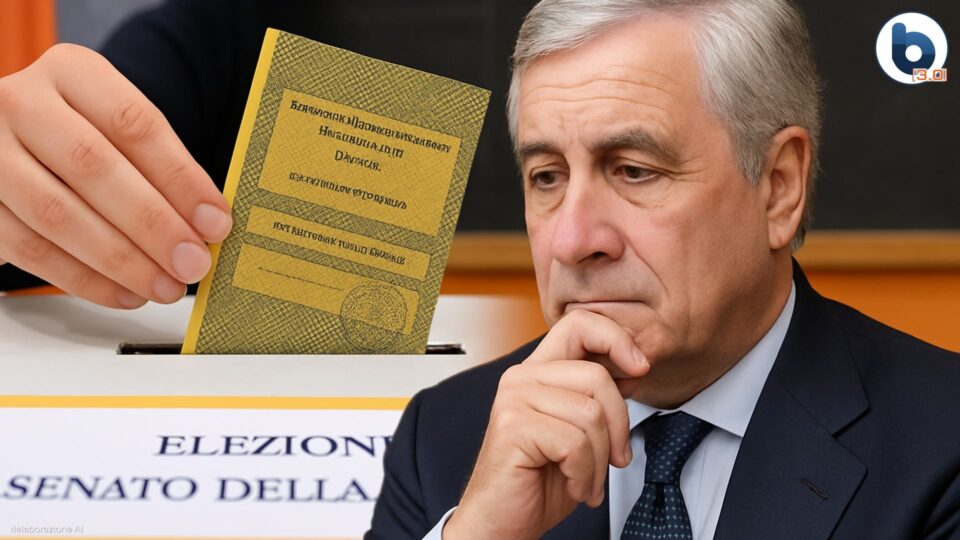
The Stabilicum: the new electoral law without preferences that divides the majority. Why is it so important?
The Meloni government relaunches the reform of the voting system. What changes, why it matters, and who is protesting.
There is one law that is more important than all the others. Not because it is the longest or most complicated, but because it decides how citizens’ votes are transformed into seats in Parliament—and therefore into power. It is called the electoral law, and it is no coincidence that, almost with every change of legislature, the governing parties try to amend it. Those in government have every interest in creating rules that favor themselves or their coalition. It is a dynamic as old as democracy itself.
Today, with the text submitted to the Chamber of Deputies known as the Stabilicum, we are back at that crossroads.
First of all: how do electoral systems work?
To understand what changes, we need to start with a basic distinction.
Majoritarian system: whoever gets the most votes in their constituency wins, even if it’s just one vote more than their opponent. It promotes stability and strong governments, but penalizes minorities. The classic case is the United Kingdom.
Proportional representation: Each party obtains as many seats as are proportional to its votes. If a party receives 20% of the vote, it obtains approximately 20% of the seats. It better represents political diversity, but can make it more difficult to form stable majorities.
Mixed system: Combines the two. The current Rosatellum—the law in force since 2017—is an example: a portion of seats is assigned by the first-past-the-post system (in constituencies where the first-place candidate wins), while another portion is assigned by proportional representation.
The Stabilicum system abandons the mixed model and returns to a proportional system, but with an important adjustment: a majority bonus.
What is the Stabilicum and how does it work?
The text submitted to the Chamber of Deputies by the center-right majority provides, in summary:
– A basic proportional system, with a 3% threshold for individual lists.
– A bonus of 70 seats in the Chamber of Deputies and 35 in the Senate for the coalition that wins more than 40% of the vote nationwide. With this mechanism, the winning coalition could reach up to 60% of the seats—a level that guarantees a solid absolute majority.
– If no coalition wins more than 40%, but at least two coalitions win between 35% and 40%, a runoff will be held between the top two. This is the most identifying clause of the reform, strongly supported by the Brothers of Italy party.
– No name of the prime ministerial candidate will be listed on the ballot: each coalition communicates this to the Interior Ministry along with its platform, but the final decision rests with the President of the Republic, as required by the Constitution.
– Blocked lists, without preferences.
– Elimination of single-member constituencies in the Rosatellum system.
Preferential voting: do you have it or not?
This is the issue that most directly affects citizens, even though it often goes unnoticed.
Preferential voting refers to the ability for voters to write the name of a specific candidate from their chosen party’s list on the ballot paper. This way, citizens choose who to send to Parliament.
With blocked lists—as in the current Rosatellum system and the Stabilicum system—the order of candidates is determined by the party before the election. Voters vote for the symbol, but do not choose the candidates. Those at the top of the list are almost certainly elected; those at the bottom are almost certainly not. In practice, it is the party leaders who decide who enters Parliament.
The debate on this point is open and legitimate: some argue that preferences foster clientelism and vote-buying; others counter that blocked lists undermine the relationship between elected officials and voters, turning parliamentarians into “yes men” for Party Leaders.
A segment of the Brothers of Italy party is pushing to reintroduce preferences into the Stabilicum, but Deputy Prime Minister Antonio Tajani, when questioned in the Chamber of Deputies, stated that the text of the law does not provide for them, while recognizing the Assembly’s sovereignty to amend it during the parliamentary process. The League has firmly opposed the reintroduction of preferences.
Fractures in the Majority and the Alarm of Constitutional Experts
On May 11, 2026, the leaders of the governing coalition—Prime Minister Giorgia Meloni, Deputy Prime Ministers Antonio Tajani and Matteo Salvini, and the President of Noi Moderati (We Moderates) Maurizio Lupi—met at Palazzo Chigi with their respective technical advisors to attempt to mend internal differences. The main issues were three: blocked lists without preferences, the size of the majority bonus, and the abolition of single-member constituencies.
While the majority sought a common line, a strong criticism came from the academic world. One hundred and twenty constitutional law professors—joined by magistrates and journalists—signed a public appeal, calling the Stabilicum “seriously damaging to constitutional values.” According to the signatories, the text presents three main critical issues: the risk that the majority bonus would be excessive, reaching up to 60% of the seats and impacting the “guaranteed majorities” enshrined in the Constitution; the incompatibility of the mechanism with bicameralism; and the pre-selection of the prime ministerial candidate, which they argue would constitute a “de facto premiership” through elections.
“It is serious that once again there is a desire to change the electoral rules almost on the eve of the vote,” the appeal states, also warning of the risk that mechanisms such as closed lists and an “abnormal” bonus could increase abstentionism rather than counteract it.
What happens now
The text is being examined by the Chamber’s Constitutional Affairs Committee. The parliamentary process is ongoing, and some amendments—on the size of constituencies, the terms of the bonus list, and potentially on preferences—could still be introduced in the Chamber. The final say will be up to the members of Parliament, and the reform process will likely be long and controversial, also in light of the possible scrutiny of the Constitutional Court.
But there’s a question worth asking as we follow all this. Majoritarian, proportional, mixed, bonuses, runoffs, open or closed lists: we’ve changed so many electoral systems over the decades. Yet, whatever the mechanism by which they’re elected, many of those who reach Parliament end up looking in the same direction: that of the great financial powers, supranational institutions, and agendas that come from far away. So the question is legitimate: if you change the rules of the game but the players continue to play for the same master—for the common citizen, after all—what really changes?